
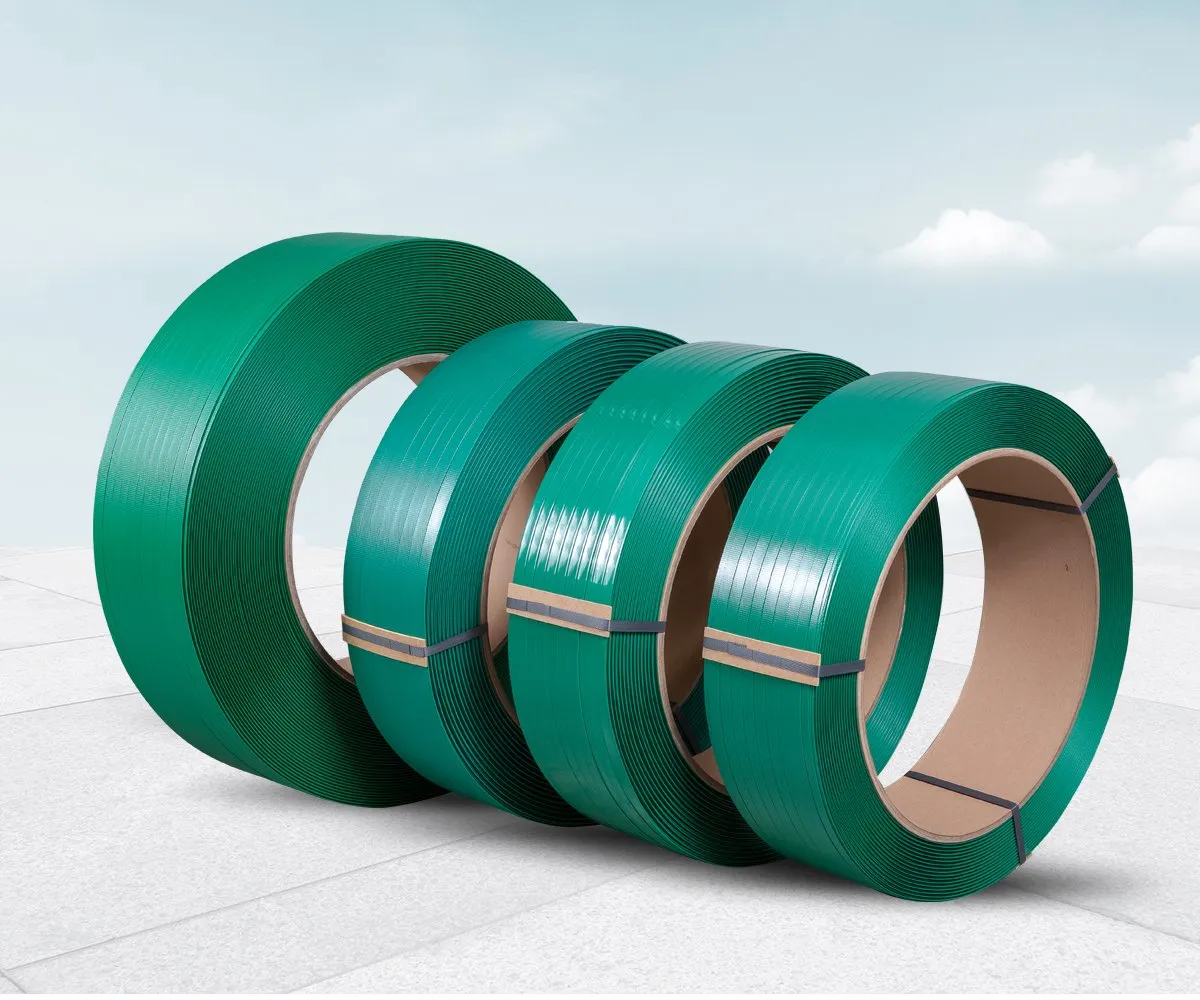
 PET-P-19-100
3/4 in (19 mm) Embossed Polyester Strapping, 1.00 mm
700 kg · 1000 m
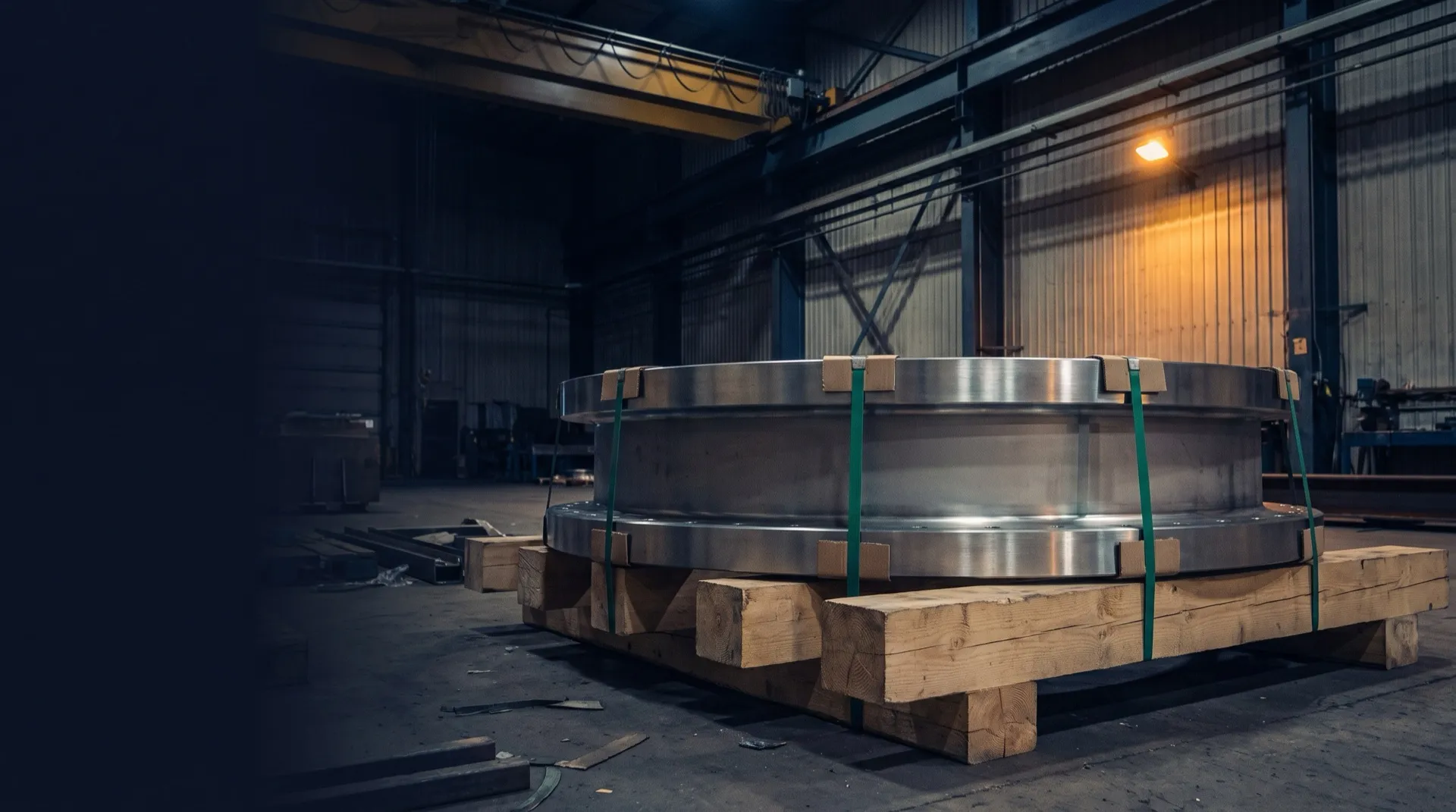
Heavy industry strapping ties castings, forgings, weldments and large components to skids, pallets or crates, and that takes a high-strength band. Embossed PET strap is our first choice here.
The center of gravity of a heavy part is rarely in the middle, and its surface is rarely flat. Run the strap over solid points of the part, protect it at corners and burrs, and use several bands rather than one heavy one so the force spreads evenly.
Strapping unitizes the package; tying the load down to a truck bed or rail car is a separate job for chains, binders or ratchet straps. The scope of ASTM D3950 includes bracing in rail car and truck loading, so add your project specification to the inquiry if it cites that standard. For rail moves into North America, our AAR Open Top Loading Rules verification covers three variants only: Type IV PET with friction welds, smooth 5/8 in × 0.035 in and 3/4 in × 0.040 in, and embossed 5/8 in × 0.035 in.
Recommended Products
Sizes, break strength and roll length from our product catalog.
PET-P-19-100700 kg · 1000 m
PET-P-16-100585 kg · 1100 m
Over rigid, load-bearing points, not thin sheet, pipe ends or machined faces. Protect corners and burrs, and place the bands evenly around the part's center of gravity.
Battery-powered or pneumatic tensioning and welding tools are common for 5/8 in and 3/4 in PET. Where there is no power or compressed air, apply the strap by hand with buckles. Check the width and thickness range of your tool.
Part weight, dimensions and transport mode (road, sea or rail) give us enough for a first recommendation.
Certifications and documents
All documents