Skip to content
Meet us at PACK EXPO International 2026Booth LU-8359 · Lakeside UpperOfficial show site(opens in a new tab)Book a Meeting
Polipak
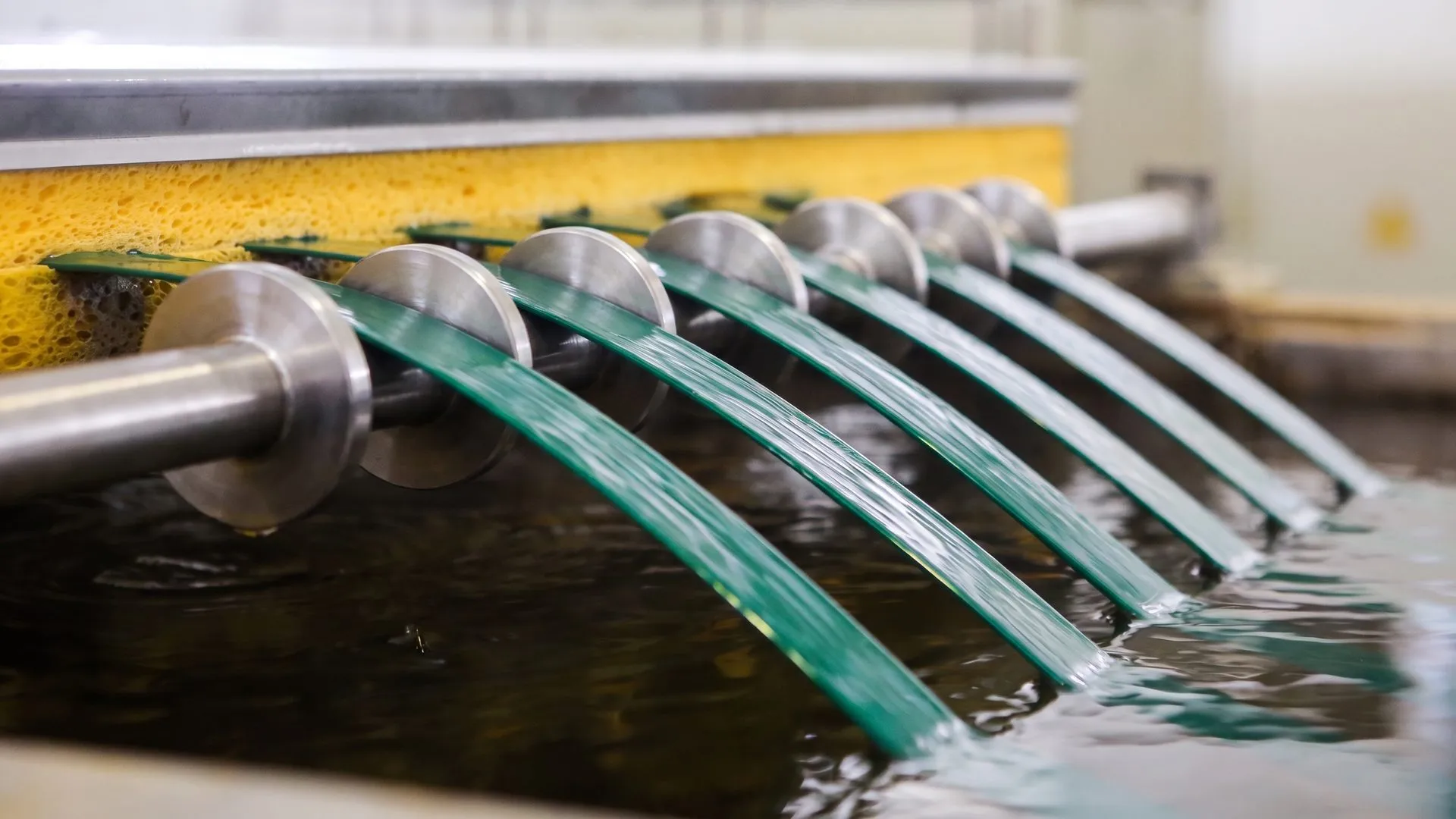
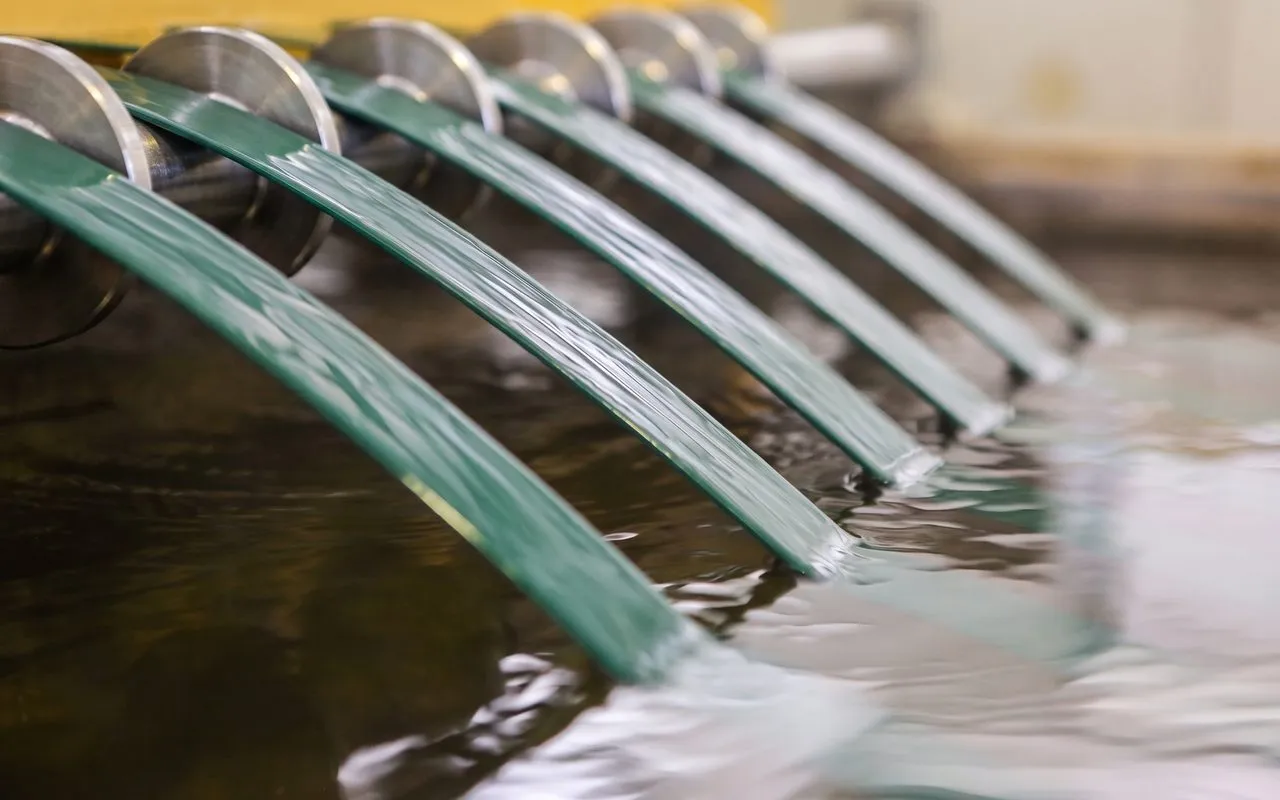
Green polyester (PET) strapping leaving the water bath on the production line

Polyester strapping technology

Polyester Strapping R&D and Polymer Engineering

Strap strength doesn't start at the rolls. It starts at the molecule. We treat polyester (PET) strapping as polymer science, from raw material to the finished coil.

Our approach

Good strapping is a well-managed polymer chain

Polyester (PET) strapping gets its strength not from the resin itself but from the stretching that follows extrusion: the chains align in the machine direction and the structure crystallizes under stress. The European specification EN 13394 likewise defines thermoplastic strapping as an extruded strip in which high tensile strength has been developed by orientation.

Good strapping comes from clean, dry feedstock, stable extrusion, balanced stretching and continuous measurement working together. Founded in 1983, Polipak Plastik manufactures polyester strapping at its plant in Gebze, Türkiye, predominantly from post-consumer recycled PET flake.

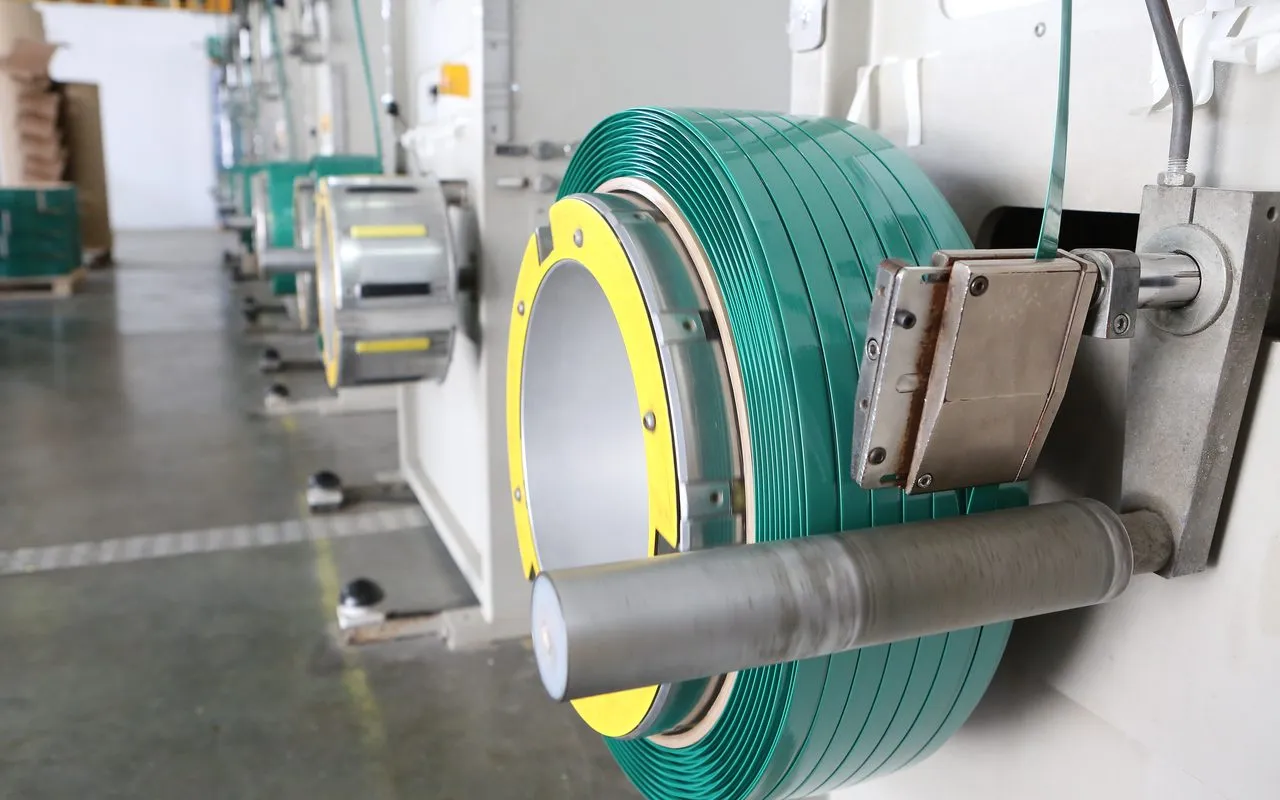
Green polyester strapping being wound into a coil on a winder at the Polipak Plastik plant in Gebze
Winder at our Gebze plant: green polyester strapping being wound into a coil.

Materials science

The physics of PET strapping

This section is general technical background on PET strapping technology; it does not contain measured values for Polipak Plastik products.

01

Intrinsic viscosity (i.V.) and solid-state polymerization

i.V. is the viscosity of PET in dilute solution and indicates average chain length, that is, molecular weight; it is expressed in dL/g. Longer chains spread load across more points during stretching, which is why break strength and resistance to lengthwise splitting in an oriented strap depend on i.V. Solid-state polymerization (SSP) holds PET below its melting point under inert gas to continue polycondensation and raise i.V.; every melt-processing step, by contrast, tends to lower i.V. through moisture and heat. The solution viscosity of PET is measured with methods such as ISO 1628-5 and ASTM D4603.

02

Orientation, draw ratio and crystallinity

The strip leaving the die is quenched in a water bath and remains largely amorphous. Stretched above its glass transition temperature (Tg), the chains align in the machine direction and strain-induced crystallization begins. The strap gets its strength at this stage. The draw ratio is the speed after stretching divided by the speed before it. A higher ratio raises strength and stiffness and lowers elongation; over-stretching makes the strap prone to lengthwise splitting. Heat setting after stretching stabilizes the crystal structure and reduces later shrinkage.

03

Creep and stress relaxation

Polymers are viscoelastic: their response to load depends on time. Creep is the gradual elongation under constant load; stress relaxation is the gradual loss of tension at constant elongation. A strap tensioned around a load is in the second situation: the tension it holds decays over time, and faster at higher temperatures. PET's main advantage over PP is that it retains tension better. This is a property of the material; an embossed surface does not eliminate creep or relaxation.

04

Elongation at break

Elongation at break shows how far a strap stretches, in percent, before it breaks. Too little elongation makes the strap brittle and liable to snap under shock; too much means a large share of the tension is lost as the load settles. That is why strapping specifications define an elongation range alongside break strength: EN 13394 classifies PET strapping into three types by minimum tensile strength and elongation at break, and the AAR's rail loading rules accept an elongation-at-break range of 5–25% for Type IV PET strapping.

05

Joint efficiency

A strap is only as strong as the joint that holds its ends. Joint efficiency is the break strength of a friction-welded, ultrasonically welded or buckled joint divided by the break strength of the strap itself. Weld quality depends on the surface layer, crystallinity and embossing. ASTM D3950 specifies joint strength as a separate property, and the AAR rules list a minimum joint strength next to the minimum break strength for Type IV PET strapping.

06

UV exposure

The ultraviolet (UV) component of sunlight breaks polymer chains, so strength declines over time, elongation in particular. If a load will sit outdoors for long periods, use UV-stabilized strapping; carbon black is one of the most effective UV-protective pigments. Outdoor service life depends on thickness, color, climate and length of exposure.

Raw material

Recycled PET flake: clean and dry

PET is a polyester: at melt temperature, water molecules cut its ester bonds. This hydrolysis reaction is fast and irreversible, shortening the chains and lowering i.V. Resin and dryer manufacturers therefore call for moisture to be brought down to a few tens of parts per million (ppm) before melt processing. Amorphous flake is crystallized before drying.

Dry flake isn't enough; it also has to be clean. Acid released as PVC degrades accelerates PET degradation; solid contaminants raise pressure and residence time at the melt filter; amorphous copolyester and polycarbonate blends reduce stretching efficiency.

Food contact and decontamination

For recycled PET that contacts food, FDA guidance in the United States and Regulation (EU) 2022/1616 in the European Union require the decontamination process itself to be assessed; in the EU that assessment relies on challenge tests with surrogate contaminants. Strapping is an industrial product that does not contact food, so these approvals do not apply to it.

Macro top view of thin, curved recycled PET bottle flakes in a backlit glass petri dish (illustrative image)
Illustrative image

Production line

From flake to coil: what happens to the polymer along the line

We make our polyester strapping on a line that REIMOTEC, then part of the Reifenhäuser Group, designed for recycled PET feedstock. Something different happens to the polymer at every station:

  1. Crystallizer and dryer

    Amorphous flake crystallizes and moisture is removed.

  2. Twin-screw extruder with vacuum

    Flake melts; vacuum degassing pulls moisture and volatiles out of the melt. The risk of chain scission starts here.

  3. Melt filter

    The screen changer holds back solid contaminants.

  4. Melt pumps and die

    Throughput is metered and the strip's cross-section is formed.

  5. Water bath

    The melt is quenched below its glass transition temperature; the strip stays amorphous.

  6. Stretching

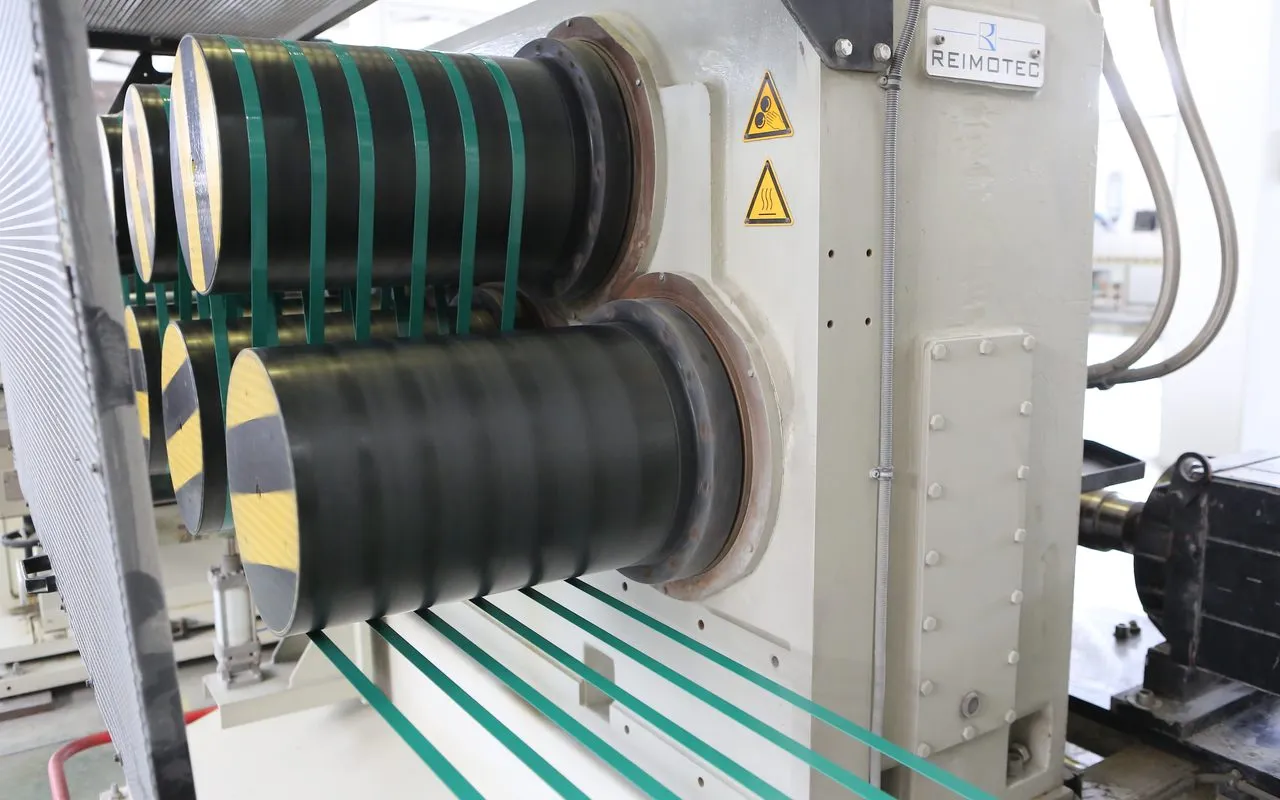
    Stretched above Tg, the chains align in the machine direction and crystallize under strain. Strength is built at this station.

  7. Embossing

    For embossed strapping, a roll presses the pattern into the surface.

  8. Heat setting

    The crystal structure is stabilized and later shrinkage is reduced.

  9. Cooling and winding

    The structure is locked in under tension and the strap is wound into coils.

Green PET strips leaving the water bath on the Polipak Plastik line
Water bath: strips leaving the die are quenched.
Green PET strips wrapped around stretching rolls on the Polipak Plastik line
Stretching rolls: this is where the strap gains its strength.

Surface engineering

Embossed and smooth surfaces

Embossing is a raised pattern rolled into the strap surface. The European specification EN 13394 states that PP and PET strapping may be either flat or embossed.

Embossed

Stiffens the section and improves feeding in the machine; the textured surface helps reduce slippage in buckles and seals. The trade-off is local thinning of the section: at the same nominal size, break strength is lower than for smooth strapping.

Smooth

With no embossing-induced thinning, it delivers higher break strength at the same nominal size.

Our product tables show the same pattern: at every size, smooth strapping has a higher break strength than embossed. Embossing does not change the polymer's viscoelastic behavior; creep and stress relaxation are not eliminated by surface treatment. The right surface depends on the machine type, the joining method and the load.

Polyester strapping product tables

Laboratory and testing

Measured at every coil change

At every coil change in production, we measure width, thickness, break strength, elongation, coil weight and camber, and record the results in shift logs. Break strength and elongation are measured on a tensile tester, width and thickness with a micrometer.

Camber is the sideways, bow-shaped deviation of the strap from its longitudinal axis. It directly affects feeding, alignment and weld quality in automatic machines; the industry's notion of "machine grade" rests on tight dimensional tolerances and low camber.

Routine measurements

  • Width
  • Thickness
  • Break strength
  • Elongation
  • Coil weight
  • Camber
  • Raw material moisture and foreign matter

Standards and certifications

What strapping standards define

ASTM D3950

The U.S. product specification for nonmetallic strapping. It classifies strapping into five types by material, with PET as Type IV, and sets values for break strength and elongation, transverse strength and joint strength; inch-pound units are the standard.

EN 13394

The European specification: it defines dimensions and physical properties for non-metallic strapping applied by hand tools or automatic machines. For PET it lists minimum break-strength classes by nominal width and defines three types by mechanical properties. It refers to EN ISO 1421 for tensile testing and EN ISO 2233 for conditioning.

ISO 527 · ASTM D638

General methods for measuring the tensile properties of plastics on standard specimens, used to compare materials. Because a strap's strength comes from orientation, the strap itself is evaluated with the methods defined in strapping specifications.

AAR OTLR

The AAR Open Top Loading Rules govern load securement on open-top rail cars in North America. They require nonmetallic strapping used for load securement to be AAR-approved and marked accordingly, and tabulate minimum break strength and minimum joint strength for Type IV PET strapping.

Naming a standard is not a declaration of conformity; conformity rests on test records produced with the method in the standard's text.

Verified certifications and approvals

  • ISO 9001:2015 Quality Management System

    Scope: manufacture and sale of plastic packaging strapping · Gebze

  • ISO 14001:2015 Environmental Management System

    Scope: manufacture and sale of plastic packaging strapping · Gebze

  • AAR Open Top Loading Rules verification · AAR ID 127

    Covers only these three variants, joined with friction welds: Type IV PET smooth 5/8 in × 0.035 in (15.9 × 0.89 mm) and 3/4 in × 0.040 in (19.1 × 1.02 mm); Type IV PET embossed 5/8 in × 0.035 in (15.9 × 0.89 mm).

Certificate details: Certifications

Product development

Superbant and custom sizes

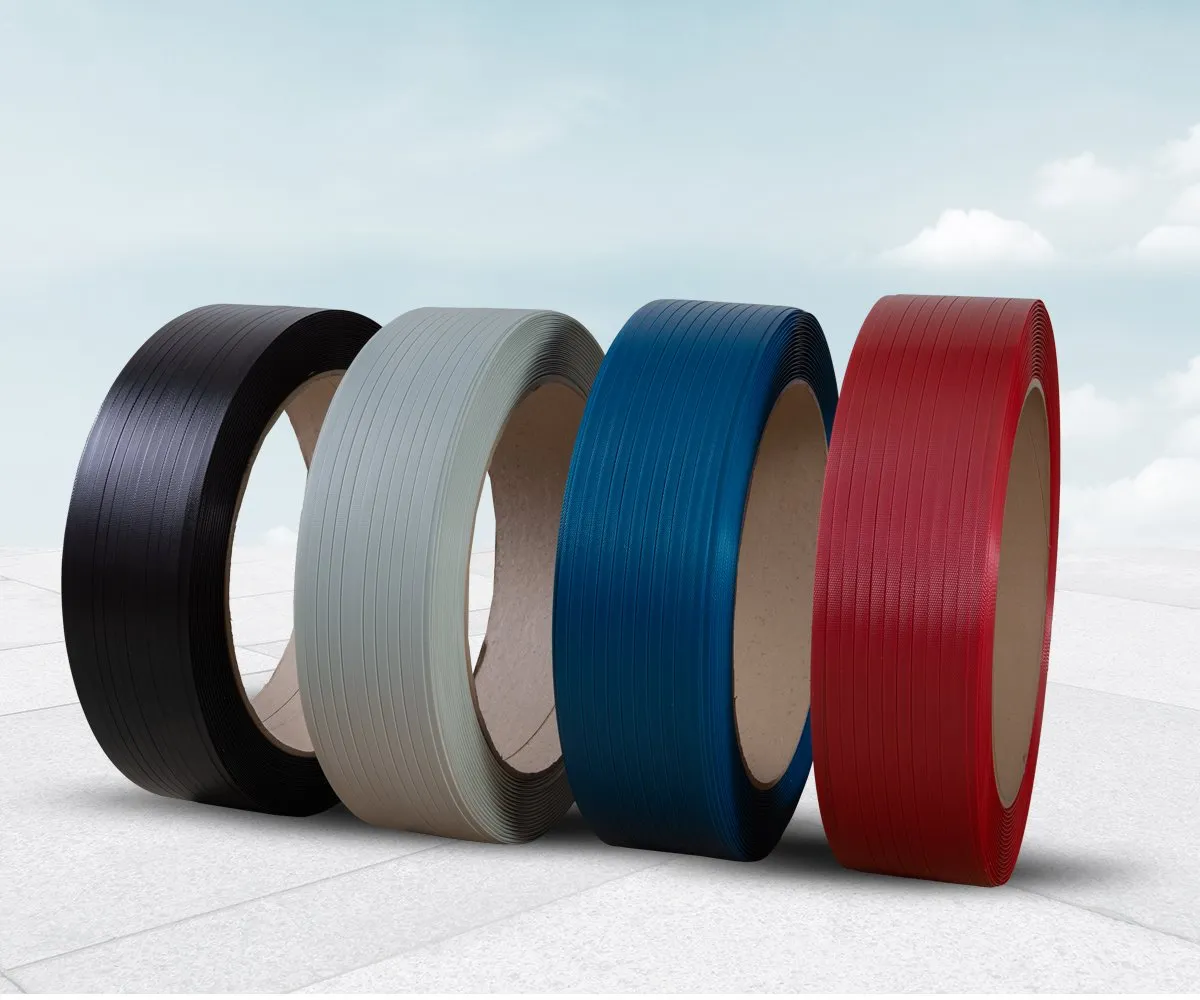
Black, gray, blue and red Superbant embossed strapping coils on cardboard cores

Superbant

Superbant is Türkiye's first patented embossed strap; it was developed and registered by Polipak Plastik. It is made from standard clear PET flake on our PET line and is used with battery-powered and buckle tools. It comes in 12 mm and 16 mm widths (approx. 1/2 in and 5/8 in) in a range of colors.

Superbant product page

Custom sizes and colors

Outside our standard range, we make strapping to your width, thickness, length and color, jumbo coils included.

Development stages

  1. Idea
  2. Pre-assessment
  3. Trial
  4. Verification
  5. Approval or cancellation

Priority areas

  • Quality and yield in our current PET strapping: camber and thickness variation
  • New sizes and segments based on market demand
  • Working with different flake grades: raw material flexibility

Have a specific requirement?

Tell us your machine type, joining method and load, and we'll recommend the width, thickness, surface and color to match.

References: standards and regulations

Standards and regulations cited on this page (official titles):

  1. ASTM D3950 — Standard Specification for Strapping, Nonmetallic (and Joining Methods)
  2. EN 13394:2001 — Packaging — Specification for non-metallic tensional strapping
  3. EN ISO 1421 — Rubber- or plastics-coated fabrics — Determination of tensile strength and elongation at break
  4. EN ISO 2233 — Packaging — Complete, filled transport packages — Conditioning for testing
  5. ISO 527 — Plastics — Determination of tensile properties
  6. ASTM D638 — Standard Test Method for Tensile Properties of Plastics
  7. ISO 1628-5 — Plastics — Determination of the viscosity of polymers in dilute solution using capillary viscometers — Part 5: Thermoplastic polyester (TP) homopolymers and copolymers
  8. ASTM D4603 — Standard Test Method for Determining Inherent Viscosity of Poly(Ethylene Terephthalate) (PET) by Glass Capillary Viscometer
  9. AAR Open Top Loading Rules Manual — Rule 19: Non-metallic strapping (Association of American Railroads)
  10. ISO 9001:2015 — Quality management systems — Requirements
  11. ISO 14001:2015 — Environmental management systems — Requirements with guidance for use
  12. Commission Regulation (EU) 2022/1616 on recycled plastic materials and articles intended to come into contact with foods
  13. U.S. FDA — Use of Recycled Plastics in Food Packaging (Chemistry Considerations): Guidance for Industry